
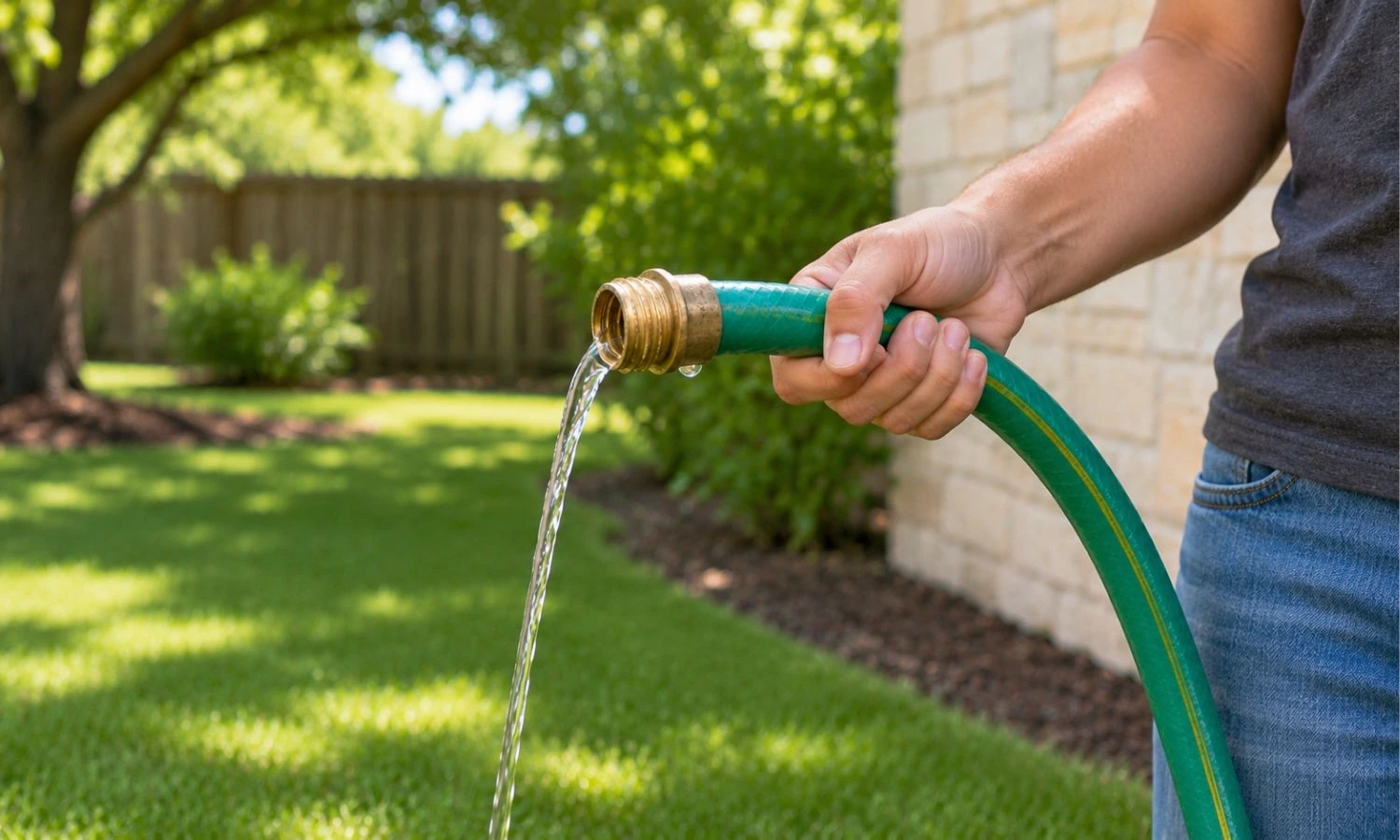
Nothing throws off your routine like stepping into the shower and getting a weak trickle instead of a steady stream. Low water pressure can feel like a small annoyance at first, but it often points to an underlying issue that’s worth addressing sooner rather than later-especially if the change is sudden.
The good news: most water pressure problems come from a handful of common causes. And with a few simple observations, you can usually narrow it down to (1) a single fixture issue, (2) a whole-home plumbing component, or (3) something happening on the city side.
In this guide, we’ll walk through the most likely causes of low water pressure San Antonio homeowners run into, what to check first, and when it’s time to call a licensed plumber. If you’d rather skip the trial-and-error, 1st Call Plumbing Heating & Air is here to help-with fast, courteous service, no trip charges, and free estimates in the Greater San Antonio area.
Table of Contents
- Start Here: Is It One Fixture or the Whole House?
- 1) Clogged Faucet Aerator or Showerhead
- 2) Partly Closed Shutoff Valve (Main or Fixture)
- 3) Problem With the Pressure Regulator (PRV)
- 4) Hidden Leak (Inside, Underground, or Slab)
- 5) Water Softener or Whole-Home Filter Restriction
- 6) Corroded or Restricted Pipes
- 7) Municipal Supply Issue or Peak-Demand Drop
- How to Measure Water Pressure (Safely)
- When to Stop Troubleshooting and Call a Plumber
Start Here: Is It One Fixture or the Whole House?
Before you replace parts or adjust anything, take a couple of minutes to identify the pattern. This one step prevents a lot of wasted time and unnecessary purchases.
A Quick 60-Second Checklist
- Test 3 spots: kitchen sink, bathroom sink, shower/tub.
- Test hot vs. cold: run each side separately (not mixed).
- Note timing: sudden vs. gradual, constant vs. comes and goes.
- Think back: any recent plumbing work, softener service, fixture replacement, or utility work nearby?
What Your Results Usually Mean
- Only one faucet/shower is weak: outlet clog, cartridge, that fixture’s shutoff valve, or a kinked/blocked supply line.
- Everything in the home is weak: main valve position, pressure regulator, treatment equipment, a leak, restricted piping, or city supply.
- Only hot water is weak: water heater shutoff, hot-side blockage, or an issue at/near the water heater.
One More Helpful Detail: Pressure vs. Flow
Homeowners often say “pressure” when the real problem is “flow.” Water pressure is the force in the pipe. Water flow is how much water can actually move through the system. You can have normal pressure but low flow if something is restricting the line (like a clogged aerator, a failing PRV, or internal pipe buildup). That’s why your pattern testing matters-it helps reveal whether you’re dealing with a local restriction or a whole-home bottleneck.
1) Clogged Faucet Aerator or Showerhead
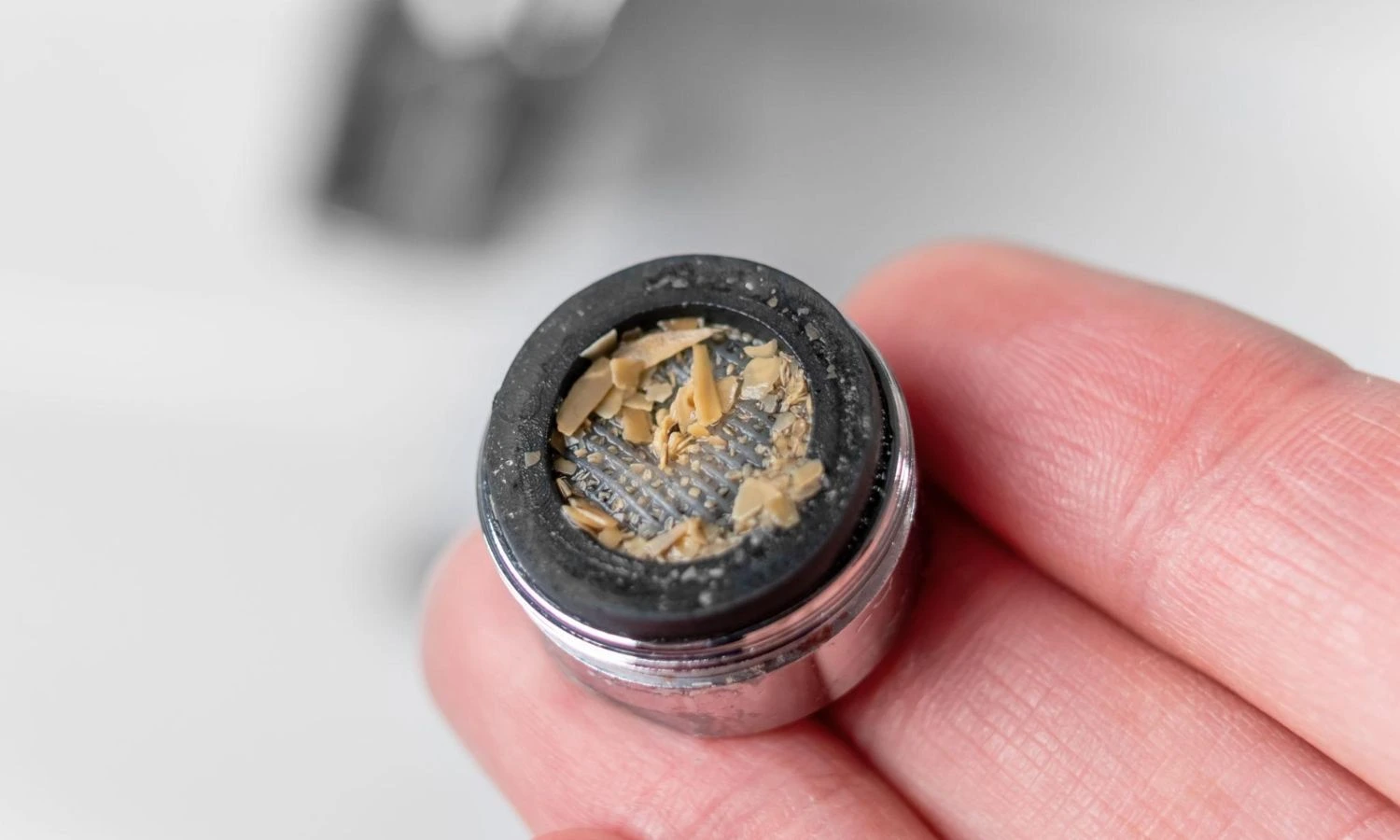
If the issue is limited to one faucet or one shower, this is the best place to start. Aerators and showerheads are designed to control spray patterns and catch debris, which also means they can clog over time.
What It Looks Like:
- One faucet has noticeably less flow than the others
- Shower spray pattern is uneven, sideways, or sputtering
- Flow improves briefly after you “jiggle” the handle, then drops again
What to Check:
- Start with the simplest test: compare cold vs. hot at that fixture. If only one side is weak, the issue may be on that supply side or in the cartridge.
- Remove the aerator: cover the drain first so parts don’t fall in. Unscrew the aerator (or use an aerator key if needed) and rinse debris from the screen.
- Look for mineral buildup: if you see white/green crust or sand-like grit, clean it per the fixture manufacturer’s directions.
- Re-test: run the faucet with the aerator off for a few seconds (careful, it may splash). If flow jumps up, you’ve found the restriction.
- For showerheads: clean the nozzles and check any inlet screen inside the showerhead connection.
Common mistake: replacing the faucet or showerhead before checking the outlet screen. A quick clean may solve the problem-and if it doesn’t, you haven’t spent money on the wrong fix.
When to call a plumber: If cleaning doesn’t improve flow, the issue may be deeper in the fixture (cartridge), or the supply line/valve feeding that fixture may be restricted.
2) Partly Closed Shutoff Valve (Main or Fixture)
This is more common than most homeowners realize-especially after plumbing work, fixture replacement, water heater service, or water softener installation. A valve that’s only half open can “feel” like low pressure and can also create noisy pipes or inconsistent flow.
What It Looks Like:
- Whole-home pressure is low: main shutoff valve not fully open (or a restriction before water reaches the home)
- Only one sink/toilet is affected: that fixture’s shutoff valve isn’t fully open, or the supply line is kinked
- Only hot water is weak: water heater shutoff valve isn’t fully open, or the hot outlet is restricted
What to Check:
- Under the sink: confirm both the hot and cold shutoff valves are fully open. Turn them gently until they stop-don’t force them.
- Toilet valve: a partly closed toilet stop can reduce refill speed and make the toilet seem “slow.”
- Supply lines: look for sharp bends, kinks, or crushed braided lines under the sink.
- Water heater: if hot-only is weak, confirm the heater shutoff valve is fully open and the line isn’t kinked.
- Main shutoff: if you know where it is and can operate it safely, confirm it’s fully open.
Important safety note: If a valve is stuck, corroded, or leaking, don’t force it. Forcing an older valve can cause it to fail-and then you’re dealing with a leak emergency instead of a pressure issue.
Helpful tip: If your pressure dropped right after a repair or new installation, mention that when you call. It’s often faster to troubleshoot when we know exactly what was touched last.
3) Problem With the Pressure Regulator (PRV)
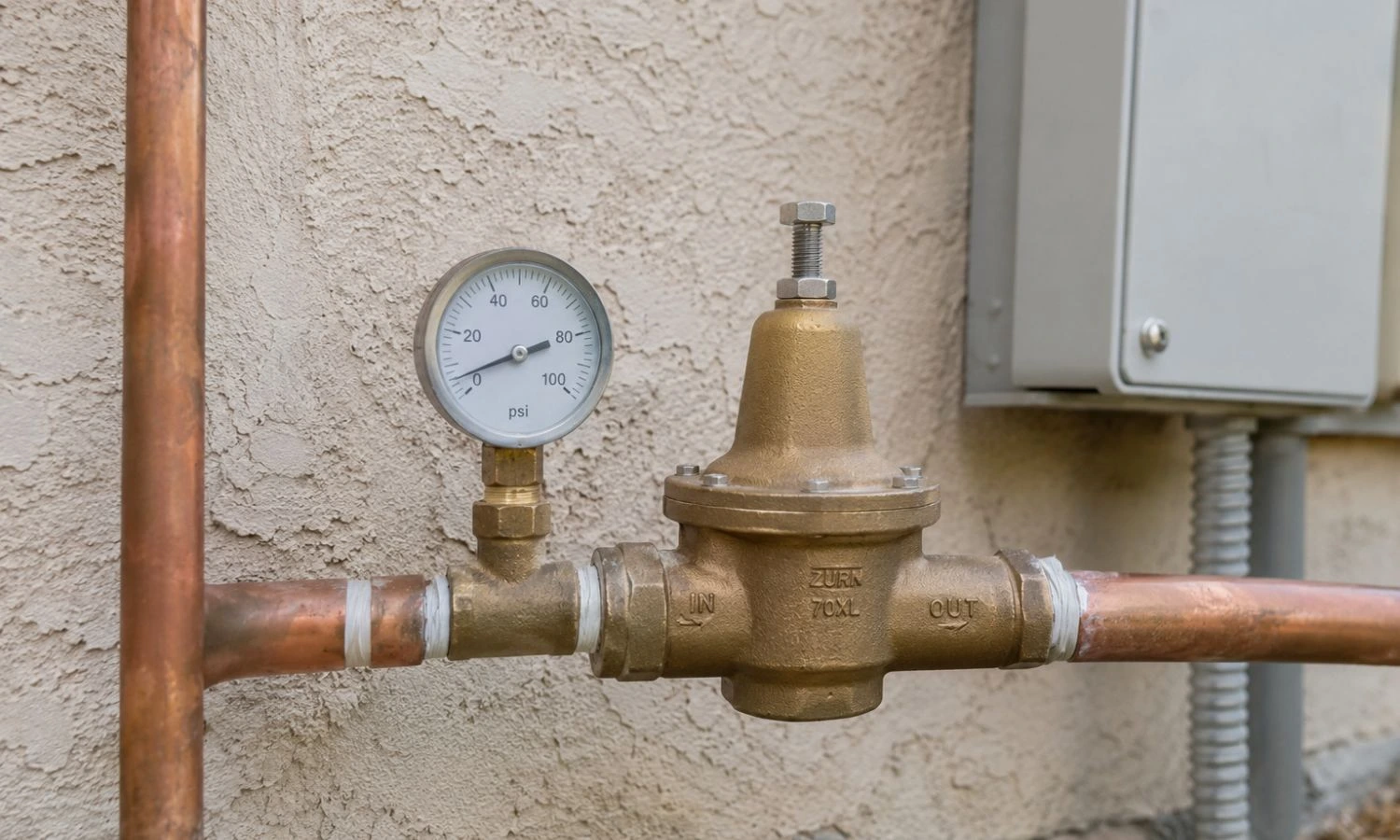
Many San Antonio-area homes have a pressure-reducing valve (PRV) that controls incoming water pressure. The PRV protects your plumbing system from high incoming pressure, but when it begins to fail, it can create low pressure, inconsistent pressure, or pressure that slowly declines.
What It Looks Like:
- Low pressure across multiple fixtures (not just one)
- Pressure swings-good flow sometimes, weak flow other times
- A noticeable change that doesn’t match any fixture-level issue
- Pressure seems OK when nothing else is running, but drops hard when another faucet turns on
What to Do (and What Not to Do):
- Do: confirm symptoms at multiple fixtures and, if possible, take a pressure reading with a gauge (see the measuring section below).
- Do: pay attention to whether the problem is constant or comes and goes. That detail helps diagnose PRV behavior.
- Don’t: start turning the PRV adjustment screw as your first step. Incorrect adjustments can create high-pressure problems that shorten the life of faucets, toilet fill valves, washing machines, and water heaters.
Why a PRV diagnosis is different: A PRV issue isn’t just a single number on a gauge. A proper diagnosis looks at pressure and flow under real use (for example, what happens to pressure when a second fixture runs).
When to call a plumber: If you suspect a PRV issue, it’s best to have it evaluated professionally. In many cases the solution is straightforward-but you want to make sure the PRV is actually the root cause before replacing parts.
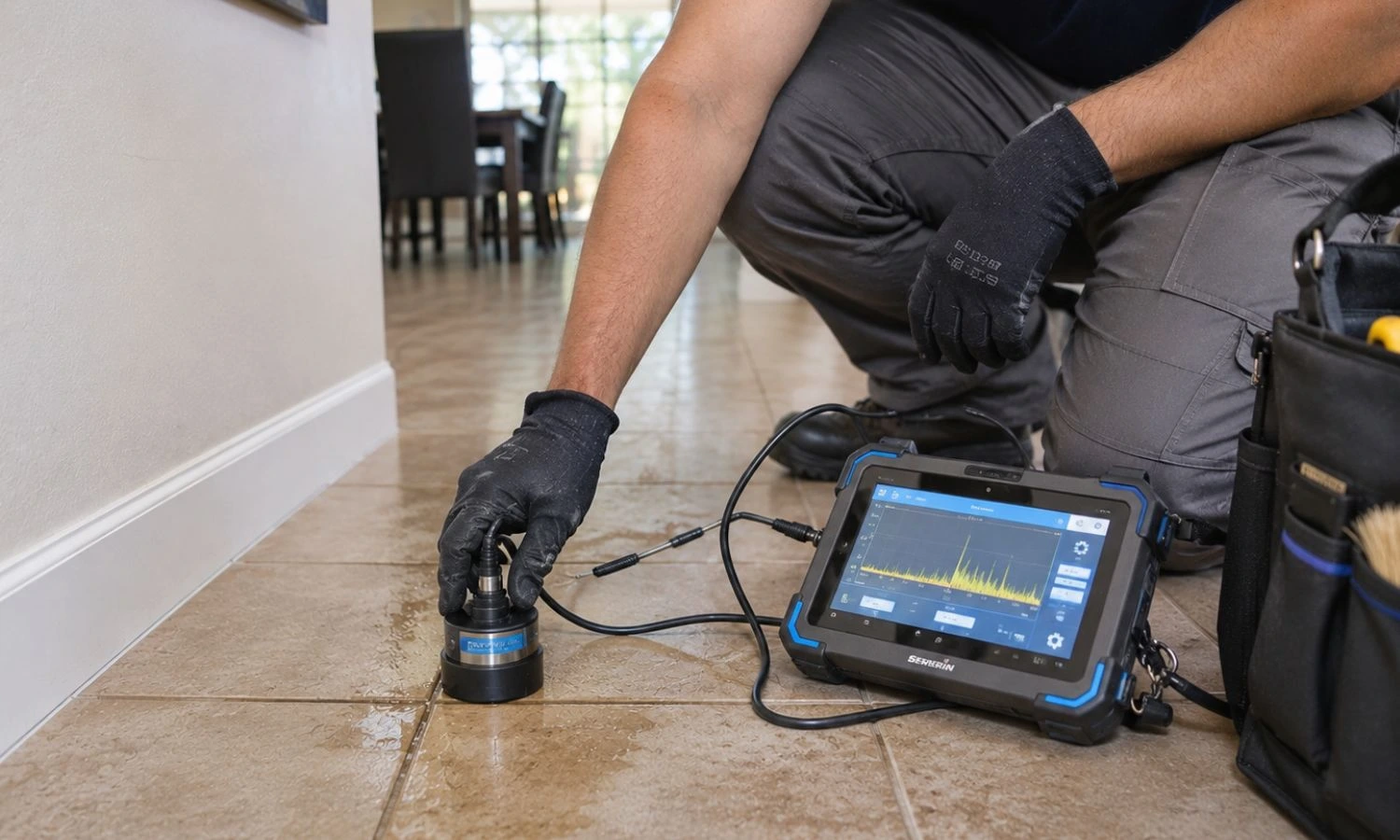
4) Hidden Leak (Inside, Underground, or Slab)
A leak can reduce available water flow and often shows up alongside higher-than-normal water use. Some leaks are obvious, but others can stay hidden inside walls, under slab foundations, or underground between the meter and the home.
Warning Signs That Point Toward a Leak:
- Unexplained spike in your water bill
- Wet spots, musty smells, or staining on ceilings/walls
- Soft spots in flooring
- Warm spots on the floor (possible hot-water leak under slab)
- Sound of running water when everything is off
Quick DIY Check (5 Minutes):
- Turn off all water use inside the home (no faucets, no showers, no laundry).
- Make sure outside water use is off too (hose bibs, irrigation timers, pool autofill, etc.).
- Check your water meter. If it shows water moving while everything is off, that’s a strong sign there’s a leak somewhere.
What not to do: Avoid digging, opening walls, or guessing where the leak is based on one symptom. The goal is to confirm whether water is moving when it shouldn’t be, then get targeted leak detection so the repair is as clean and direct as possible.
When to call a plumber: If the meter indicates water is moving, or you see any signs of water damage, stop troubleshooting and schedule leak detection. Leaks can cause structural damage over time and can lead to bigger repairs if they’re left alone.
5) Water Softener or Whole-Home Filter Restriction
In many San Antonio homes, water softeners and whole-home filtration systems are part of everyday plumbing. When a softener, filter, or valve assembly is clogged-or if something was left partially closed after service-pressure can drop throughout the home.
What It Looks Like:
- Low flow at multiple fixtures (not just one)
- Pressure got worse after softener/filter installation or maintenance
- Pressure improves a bit when you run only one fixture, but drops fast when a second fixture turns on
What to Check:
- If you’re comfortable doing so, place the softener/filter on bypass (following the manufacturer’s instructions) and re-test water at a couple of fixtures.
- If pressure improves on bypass, the treatment equipment (or its valves) is likely part of the problem.
- If nothing changes on bypass, move on-you’ve ruled out one major category.
Common mistake: assuming the softener is “bad” when the real issue is a valve position or a clogged pre-filter. That’s why the bypass test is helpful: it narrows the issue without guessing.
Want to go deeper? Hard water buildup can contribute to restrictions over time. Here are two helpful resources from our team: How Hard Water Damages Plumbing and Appliances and Water Softener Alternatives.
Tip: Don’t force bypass valves. If you’re not sure what you’re looking at, we can handle the test and explain exactly what we find.
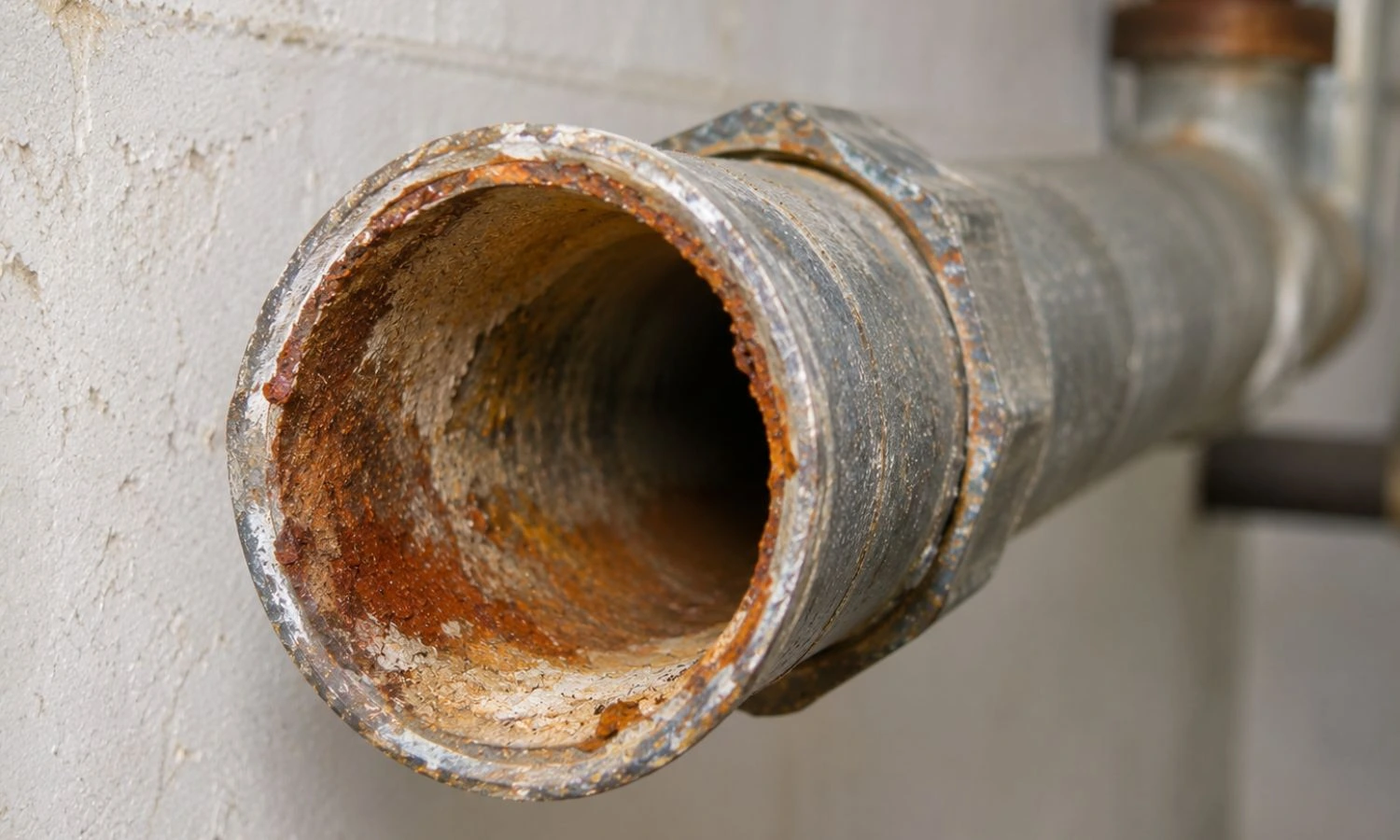
6) Corroded or Restricted Pipes
If your pressure has slowly gotten worse over the years, the issue may be restriction inside the plumbing itself. This is especially common in older galvanized piping, but restrictions can also develop in certain fittings or sections of pipe where buildup accumulates.
What It Looks Like:
- Gradual decline in flow over time
- Multiple fixtures are affected (and it’s worse when two are used at once)
- Some fixtures are consistently weaker than others (depending on where restrictions are located)
- Frequent debris in aerators/showerheads (a symptom worth noting)
How a plumber narrows this down: The goal is to figure out where the restriction is happening. Is it one branch line feeding a bathroom? The line feeding the water heater? The service line coming into the home? Answering that question helps avoid over-scoping the fix.
What to do next: Have a plumber evaluate the piping layout and isolate the restricted area. Pipe replacement isn’t always the first step-but when it’s needed, you want it done for the right reason, with a clear plan for what’s being replaced and why.
7) Municipal Supply Issue or Peak-Demand Drop
Sometimes, nothing inside the home is wrong. Water pressure can drop due to city-side issues (repairs, maintenance, breaks) or simply because demand is high in the neighborhood at certain times of day.
What It Looks Like:
- Sudden whole-home pressure drop
- Neighbors report the same problem
- Pressure is weaker at predictable times (morning and evening peak use)
What to Check:
- Ask a neighbor: a quick “Are you noticing low pressure too?” can save you time.
- Re-test later: if pressure returns when demand is low, city-side demand may be contributing.
- Look for recent work nearby: construction and utility work can sometimes affect supply temporarily.
Important: Don’t assume it’s the city until you’ve confirmed the issue is happening beyond your home. If your neighbors are fine, the cause is more likely inside your plumbing system-and the checks above will help narrow it down.
How to Measure Water Pressure (Safely)
If you have an outdoor hose bib, you can check static pressure using an inexpensive hose-thread pressure gauge. This won’t diagnose every issue by itself, but it gives you a useful baseline to share with your plumber.
How to Get a Useful Reading:
- Make sure all water use is off (no faucets, laundry, dishwashing, irrigation, etc.).
- Attach the gauge to the hose bib and open the valve fully.
- Write down the reading and the time of day.
- If you want a second data point, turn on one faucet inside and see how much the gauge reading drops.
How to Interpret It (in Plain Terms):
- Static pressure looks normal but showers are weak: often points to a restriction (flow problem) instead of a pure pressure problem.
- Static pressure is low everywhere: could be PRV-related, valve-related, leak-related, or city supply-related.
Reminder: Pressure and flow aren’t the same thing. That’s why it’s helpful to combine a gauge reading with your fixture pattern notes.
When to Stop Troubleshooting and Call a Plumber
DIY checks are great for narrowing the problem, but there’s a point where continuing to troubleshoot can create risk-especially when valves are old or you suspect a hidden leak.
Call a licensed plumber if:
- Your water meter shows usage when everything is off
- You see visible water damage, damp areas, or signs of a slab leak
- Whole-home pressure is low and basic valve checks don’t help
- You suspect the pressure regulator (PRV) is failing
- You’re not sure what valve/equipment you’re looking at (and don’t want to risk a leak)
If you’ve been Googling low water pressure San Antonio and want a clear answer without the runaround, 1st Call Plumbing Heating & Air can help. Learn more about our plumbing services or schedule a visit when it’s convenient.
How to Measure Water Pressure (Safely)
If you have an outdoor hose bib, you can check static pressure using an inexpensive hose-thread pressure gauge. This won’t diagnose every issue by itself, but it gives you a useful baseline to share with your plumber.
How to Get a Useful Reading:
- Make sure all water use is off (no faucets, laundry, dishwashing, irrigation, etc.).
- Attach the gauge to the hose bib and open the valve fully.
- Write down the reading and the time of day.
- If you want a second data point, turn on one faucet inside and see how much the gauge reading drops.
How to Interpret It (in Plain Terms):
- Static pressure looks normal but showers are weak: often points to a restriction (flow problem) instead of a pure pressure problem.
- Static pressure is low everywhere: could be PRV-related, valve-related, leak-related, or city supply-related.
Reminder: Pressure and flow aren’t the same thing. That’s why it’s helpful to combine a gauge reading with your fixture pattern notes.
Conclusion: Find the Pattern, Then Fix the Right Problem
Low water pressure usually comes down to one of seven culprits: a clogged fixture, a partially closed valve, a PRV issue, a leak, restricted treatment equipment, aging pipes, or a municipal supply problem. Start by identifying whether the issue is isolated or whole-home, then work through the checks one at a time.
Request a free service estimate: Call 210-446-0200 to schedule with 1st Call Plumbing Heating & Air. We’re available seven days a week from 7:00 AM–7:00 PM.